
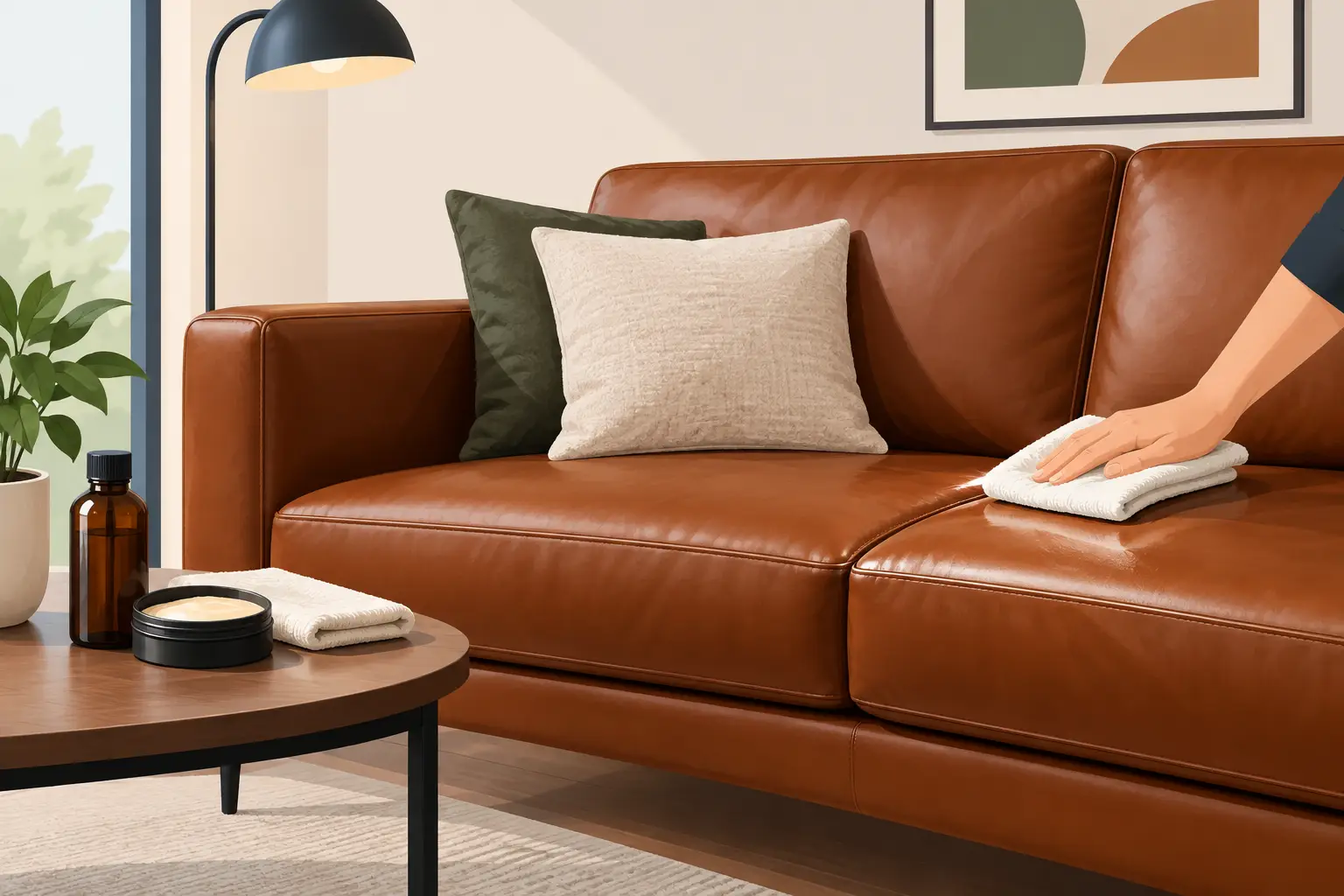
A leather lounge can look clean from across the room while quietly drying out where it matters most: on the seat cushions, armrests and headrests. Body oils, sunscreen, pet contact, dust and everyday spills gradually affect the finish, leaving leather dull, stiff or prone to cracking. A professional leather lounge conditioning service is designed to remove surface grime safely, sanitise the upholstery and replenish the leather with the right conditioning treatment.
For homeowners, renters, landlords and businesses across Greater Sydney and the Illawarra, this is not simply a cosmetic clean. Proper leather care helps preserve an expensive piece of furniture and keeps it looking presentable for longer.
Why leather lounges need more than a quick wipe
Leather is durable, but it is not maintenance-free. It has a protective finish that can wear down over time, particularly on frequently used areas. When residue is left sitting on the surface, it can make the leather feel sticky, cause discolouration or contribute to premature wear.
Household cleaning sprays can create problems too. Products containing strong detergents, alcohol, bleach, oils or silicone may strip the finish, leave a greasy film or change the leather’s colour and feel. Even baby wipes and dishwashing liquid can be too harsh when used regularly.
Conditioning is the step that many lounges miss. After safe cleaning, a suitable leather conditioner helps maintain suppleness and improves the appearance of dry, tired-looking upholstery. It will not reverse deep cracks or repair torn leather, but it can slow further drying and help protect the lounge from normal day-to-day use.
What a leather lounge conditioning service includes
Every lounge should be assessed before treatment begins. Leather comes in many forms, including protected or pigmented leather, aniline leather, semi-aniline leather, nubuck and suede-style finishes. What works well on one type may permanently mark another, so a one-size-fits-all approach is not good enough.
A trained technician begins by checking the leather type, its condition and any visible concerns. This includes looking for colour loss, cracking, staining, ink marks, pet damage, mould, body-oil buildup and weakened seams. A test in an inconspicuous area helps confirm that the chosen cleaning method is suitable.
The service generally involves gentle vacuuming of joins and creases, where dust and crumbs collect, followed by a leather-safe cleaning solution to lift soil from the surface. Problem areas such as arms, headrests and seat fronts receive extra attention because these are where oils and grime build up most heavily.
Once cleaned, the lounge can be sanitised using a treatment suited to the material and the condition of the upholstery. The leather is then conditioned to restore a softer, more even finish without leaving it overly slippery or greasy. Where appropriate, a protectant may also be applied to make ongoing maintenance easier and give the surface added resistance to everyday spills.
When your leather lounge needs professional attention
A lounge does not need to look severely damaged before it is worth booking a clean. In fact, regular care is far more cost-effective than waiting until the leather becomes dry, stained or cracked.
Look out for a change in texture. Leather that feels rough, dry or tacky needs attention. Dull patches on the seating areas, dark marks around headrests, faded colour, pet odours and a general lack of freshness are also common signs that the lounge is overdue for professional care.
Spills should be addressed quickly, especially red wine, coffee, ink, food, makeup or pet accidents. Blot the area gently with a clean, dry cloth and avoid rubbing it further into the leather. Do not soak the surface or use a random stain remover from the cupboard. Leather can react unpredictably, and an attempted DIY fix may leave a larger mark than the original spill.
For busy family homes, rental properties and commercial waiting areas, professional cleaning and conditioning every 6 to 12 months is often a sensible starting point. A lounge exposed to direct sunlight, pets, heavy use or frequent entertaining may need more regular care. The right schedule depends on the leather type and how the furniture is used.
Cleaning, sanitising and conditioning are different jobs
It is easy to assume that one product does everything, but cleaning, sanitising and conditioning have separate purposes. Cleaning removes visible soil and oily residue. Sanitising helps reduce hygiene concerns caused by everyday contact, pets, food spills and odours. Conditioning supports the feel and appearance of the leather after cleaning.
This distinction matters when a lounge has been through a busy period. Perhaps the family dog uses the corner cushion as a bed, children have left snack marks on the seats, or visitors have used the lounge during a renovation. A conditioner alone can make the leather shine temporarily, but it does not remove embedded grime. Cleaning without conditioning can also leave already dry leather looking flat.
At Neo Carpet Cleaning, the focus is on matching the treatment to the furniture rather than applying the same product to every lounge. That careful approach is especially important with delicate finishes, pale-coloured leather and older furniture that may already show signs of wear.
What conditioning can and cannot fix
A professional leather lounge conditioning service can improve the look and feel of dry, dull leather, reduce surface grime and help keep the finish in better condition. It can also freshen furniture that has picked up odours from pets, food or general use.
There are limits, however. Deep cracking, peeling, large tears, severe fading and damaged stitching may need specialist leather repair or reupholstery work. Conditioning can help prevent the problem from getting worse, but it cannot rebuild missing colour or restore leather that has broken down beyond the surface.
Mould is another situation that needs careful assessment. Leather affected by moisture damage can develop staining and odours, particularly after water leaks, flooding or poor ventilation. Fast action is essential. The area needs to be cleaned, treated and dried correctly to reduce the risk of longer-term moisture damage. Don’t delay and call the professionals if water has reached your lounge.
Simple habits that keep leather looking better
Between professional services, a few small habits make a real difference. Keep the lounge away from prolonged direct sun where possible, as UV exposure can dry and fade the surface. Wipe dust away with a soft dry or slightly damp cloth, then dry the area straight away.
Try to avoid sitting on the lounge with wet swimwear, heavy sunscreen, hair products or oily work clothes. These residues commonly build up on pale leather and high-contact areas. If the lounge is near a window or heater, rotating cushions where possible can help wear develop more evenly.
Do not use furniture polish, cooking oils or heavy moisturisers as a substitute for leather conditioner. These products are not made for upholstery leather and can leave residue that attracts more dirt. A gentle maintenance routine and periodic professional treatment will deliver better results than frequent experimenting with household products.
Protect the lounge before wear becomes damage
Leather furniture is often one of the most-used pieces in a home or workplace, so it deserves care that suits the material. Safe cleaning, targeted sanitisation and proper conditioning can keep it softer, fresher and more presentable while helping reduce the effects of everyday wear.
If your lounge is looking dull, feeling dry or carrying stubborn marks and odours, arrange a professional assessment before the damage becomes harder to manage. Your satisfaction is the priority, and a well-cared-for leather lounge is far easier to enjoy for years to come.


