A carpet can look acceptable from the doorway while holding weeks of foot traffic, fine dust, food crumbs and tracked-in moisture deep in its fibres. That is why professional office carpet cleaning is not just about presentation. It helps create a cleaner, more comfortable workplace for staff, visitors and clients while protecting one of the bigger finishes in your premises.
For offices across Greater Sydney and Illawarra, the right approach depends on how the space is used. A quiet professional suite has different cleaning needs from a busy reception area, medical practice, retail office or shared workspace. The best results come from inspecting the carpet, treating the problem areas properly and allowing enough drying time before the workplace returns to normal.
Why office carpets become dirty faster than expected
Commercial carpet is built to handle traffic, but it still collects soil every day. Grit from shoes works its way down through the pile, where it can act like sandpaper as people walk over it. In entryways and corridors, this gradual abrasion can leave carpet looking flat, dull or worn well before its time.
Spills create a different problem. Coffee, tea, soft drink, food oils and ink can leave visible marks, but even a spill that disappears after blotting may leave sticky residue behind. That residue attracts more soil, which is why a small spot can become a dark patch over time.
Office odours are often more subtle. Wet umbrellas, food at desks, damp carpet after a leak, or years of built-up soil can affect how a room smells, particularly when the heating or air conditioning is running. Surface deodorising may temporarily mask the issue, but deep cleaning and targeted odour treatment deal with the source more effectively.
What professional office carpet cleaning involves
A proper clean starts with an assessment, not a one-size-fits-all machine setting. A trained technician checks the carpet fibre, construction, colour condition, traffic patterns, stains and any concerns such as lingering odours or previous water exposure. This matters because the wrong chemical, excessive moisture or harsh agitation can damage carpet backing, cause colour loss or leave residues behind.
Pre-treatment for stains and heavy traffic
High-traffic lanes and visible spots are pre-treated before deep cleaning begins. Different stains need different methods. A tannin-based tea or coffee mark is treated differently from grease, ink or a protein-based food spill. Treating every stain the same way can set it further into the fibre or damage the carpet.
Pre-treatment is given time to work before the main clean. This helps break down embedded soil so it can be extracted rather than simply moved around the carpet surface.
Deep steam cleaning and extraction
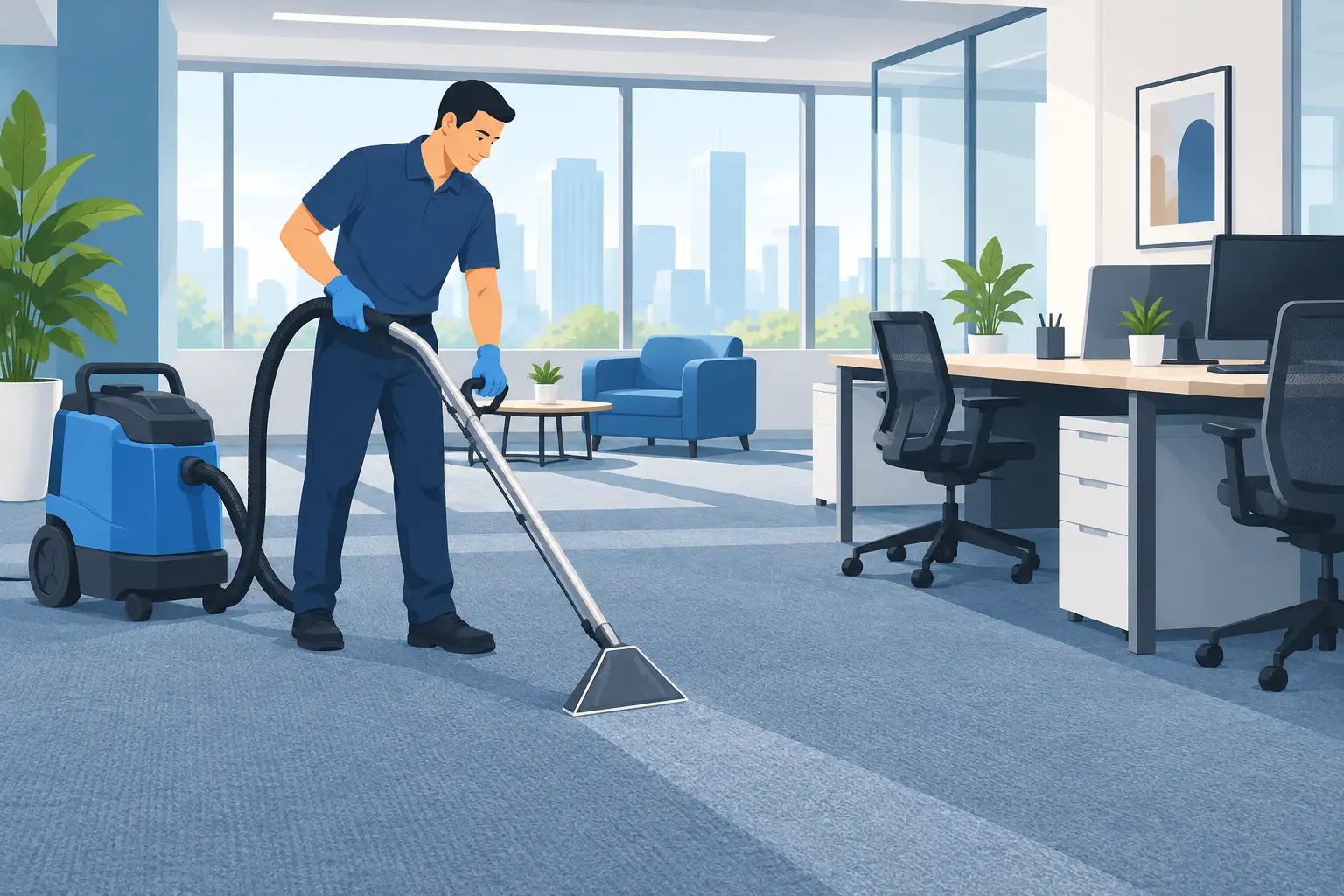
For many commercial carpets, hot water extraction – often called steam cleaning – provides a thorough result. Fibre-safe cleaning solution and heated water are applied in a controlled amount, then powerful extraction equipment removes loosened dirt, cleaning residue and moisture.
The aim is clean carpet with controlled drying, not a carpet left soaking wet. Drying commonly takes around two to six hours, although this varies with carpet type, weather, ventilation, humidity and how heavily the carpet was soiled. Offices with good airflow and air conditioning may dry faster, while dense carpet in a closed room can take longer.
Sanitisation where it makes sense
Cleaning removes soil, while sanitisation is a separate step used where hygiene is a particular concern. Shared workspaces, healthcare-adjacent offices, childcare administration areas and premises affected by illness may benefit from a tailored sanitising service. ULV fogging can distribute disinfectant as a fine mist across suitable hard-to-reach areas when used as part of an appropriate cleaning plan.
Fogging is not a replacement for carpet cleaning. Disinfectant cannot extract coffee residue, grit or soil from the pile. For the strongest outcome, visible contamination and embedded dirt should be removed first, then sanitisation can be considered for the wider workplace environment.
How often should an office carpet be cleaned?
There is no single schedule that suits every business. A low-traffic office with a shoes-off policy and regular vacuuming may only need professional carpet cleaning every 12 months. A busy workplace with client foot traffic, shared kitchens and a reception area will often benefit from a six-monthly service, with spot treatment and maintenance in between.
Entry areas, hallways and meeting rooms usually need attention sooner than private offices. If the carpet looks darker along walking paths, has a stale smell after the weekend, or no longer lifts after vacuuming, it is time to book a professional assessment.
Regular cleaning can also support carpet warranty requirements, particularly in commercial installations. Keep service records and deal with spills promptly. Waiting until the carpet looks heavily soiled usually means more intensive treatment is needed and some staining may be harder to remove completely.
Preparing your workplace for carpet cleaning
A little preparation helps the job run on time and gives technicians access to the areas that need attention. Smaller items, loose cables, rubbish bins and personal belongings should be moved from the carpet where practical. Let staff know which areas will be cleaned and when they can be used again.
Large desks, fixed workstations and bulky cabinets do not always need to be moved. The cleaning plan can be tailored around them, focusing on accessible traffic areas and exposed carpet. If furniture needs to be shifted, discuss this before the appointment so the right amount of time and equipment can be allowed for.
For minimal disruption, many businesses arrange cleaning after hours, before opening or during quieter periods. This is especially useful for reception spaces and offices where staff need access to computers and workstations throughout the day. The trade-off is drying time: cleaning late in the day can allow carpets to dry overnight, but adequate ventilation still matters.
Avoiding common carpet cleaning mistakes
The quickest response to a spill is usually the best one. Blot the area with a clean white cloth rather than rubbing it, as rubbing can spread the stain and push it deeper into the fibres. Avoid pouring supermarket chemicals onto commercial carpet without checking whether they are suitable for the fibre and backing.
Over-wetting is another common issue. Hiring equipment can seem cost-effective for a small office, but it may lack the extraction power needed to remove water and soil effectively. Damp carpet that stays wet for too long can develop odours, wick stains back to the surface and create conditions that need further attention.
Strong fragrances can also be misleading. A fresh smell is pleasant, but it does not prove the carpet has been deeply cleaned. The real test is whether the carpet feels cleaner, looks more even in high-traffic areas and dries properly without a musty odour.
When water damage needs urgent action
A burst pipe, overflowing appliance or stormwater intrusion is not a routine carpet cleaning job. Water can travel beneath carpet, soak underlay and affect skirting boards, furniture and wall cavities. The longer moisture remains, the greater the risk of staining, odours and damage to flooring materials.
Do not delay and call the professionals if office carpet has been flooded. Rapid water extraction, onsite assessment and controlled drying can make a major difference to what can be saved. Contaminated water requires extra care, as it may not be safe to treat the space as a standard cleaning task.
Neo Carpet Cleaning provides detailed commercial carpet care across Greater Sydney and Illawarra, from stain treatment and deep steam cleaning to urgent water extraction. The focus is straightforward: clean fibres thoroughly, manage moisture carefully and leave your workplace looking ready for business.
A clean office carpet will not solve every workplace problem, but it quietly improves the impression people carry with them. Book cleaning before traffic lanes, odours or a small spill become a larger restoration job, and give your staff and clients a workplace that feels properly looked after.


