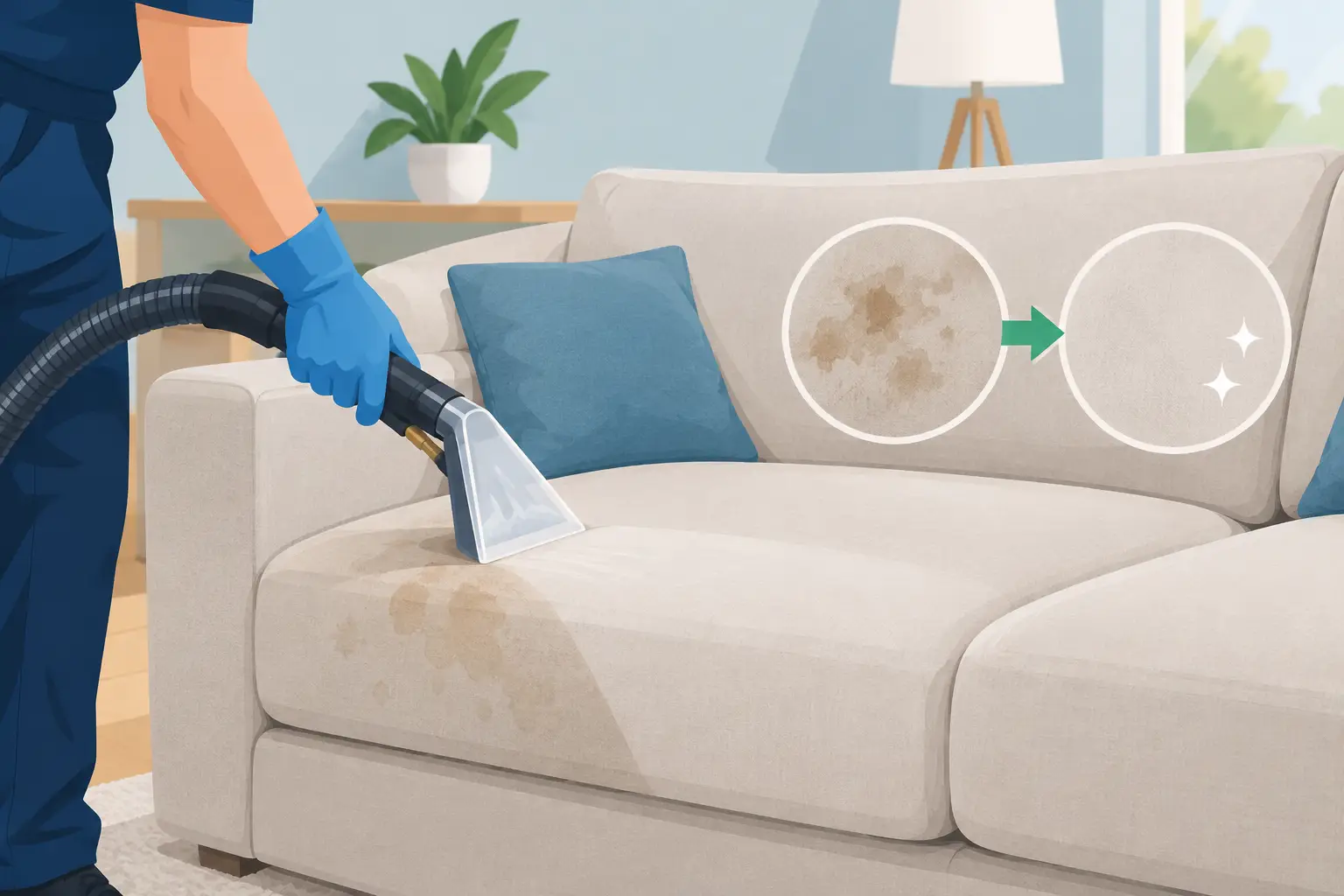
A red wine spill on a pale fabric lounge, muddy paw marks on dining chairs or an old coffee ring on the favourite armchair can make the whole room feel tired. So, can upholstery cleaning remove stains? In many cases, yes. Professional upholstery cleaning can substantially reduce or completely remove common stains, odours and built-up soil. The result, however, depends on the fabric, the spill, how long it has been there and what has already been used on it.
The right treatment is not simply about applying more detergent and scrubbing harder. Upholstery has padding, backing materials, dyes and fibres that need careful handling. A trained technician starts by identifying the material and the stain, then uses a suitable pre-treatment and controlled deep cleaning process to give the best possible result without damaging the furniture.
Can upholstery cleaning remove stains from every fabric?
There is no honest one-size-fits-all answer. Many synthetic fabric lounges respond very well to professional steam cleaning and targeted stain treatment. Polyester, microfibre and many durable woven fabrics can release food spills, drink marks, general grime and pet-related mess when they are treated correctly.
Natural fibres can be more complicated. Cotton, linen, viscose and wool blends may be prone to colour loss, browning, shrinkage or water marking if they are overwet or cleaned with the wrong solution. Delicate fabrics need lower-moisture methods, gentler products and close control of drying. Leather is different again: it should be cleaned, sanitised and conditioned with products designed specifically for leather, not steam-cleaned like a fabric sofa.
Even when a stain cannot be removed completely, professional cleaning can often improve its appearance, reduce its outline and remove the residue that attracts further dirt. That is a worthwhile result for a lounge, dining setting or office seating that still has plenty of life left.
What determines whether a stain will come out?
The biggest factor is time. Fresh spills are generally easier to remove because they have not had the chance to dry, oxidise or bond deeply into the fibres. A quick response matters, especially with red wine, coffee, tea, soft drink, sauces, pet urine and makeup.
The type of stain matters just as much. Water-based spills may release with the correct cleaning solution and extraction. Oil-based stains such as body oils, greasy food, cosmetics and some inks need different chemistry. Protein stains, including milk, blood and pet accidents, require careful treatment so they do not set further or leave an odour behind.
Previous DIY attempts can also affect the outcome. Supermarket sprays, dishwashing liquid, vinegar, bicarb soda and heavy scrubbing can leave sticky residue, spread the stain or alter the fabric colour. Heat can permanently set some stains. If a lounge cushion has been soaked repeatedly, the stain may travel into the foam or backing, where it can wick back to the surface while drying.
Sunlight is another hidden issue in Sydney and Illawarra homes. A spill that appears to be a stain may partly be colour fading from UV exposure. Cleaning removes soil, but it cannot restore dye that has faded or been bleached out of the fabric.
Stains that often respond well
Professional treatment is particularly effective for everyday household marks. Coffee, tea, food spills, tracked-in dirt, light grease, soft drink, fresh pet accidents and body oil build-up are all common upholstery cleaning jobs. General dullness on armrests, headrests and seat cushions can also improve dramatically after deep fibre cleaning.
Odours often improve at the same time. Removing the source material from the fabric and cushioning is more effective than simply covering the smell with fragrance. Where hygiene is a concern, sanitisation can be included to freshen upholstered furniture after cleaning.
Stains that may be permanent
Some marks are not technically removable stains. Fabric dye can be stripped by bleach, acne treatments, strong cleaning chemicals or urine. Permanent marker, certain inks, paint, rust, nail polish and old dye transfer can be difficult or impossible to remove without affecting the upholstery itself.
Age changes the odds too. A five-year-old stain that has been repeatedly heated, scrubbed or exposed to sunlight may have permanently altered the fibre. A reliable cleaner should explain this before starting, rather than promising a result that cannot be delivered.
How professional upholstery stain removal works
Good upholstery cleaning begins with an inspection. The technician checks the fabric type, construction, colour stability, stain location and condition of the cushions. This step helps determine whether hot water extraction, low-moisture cleaning, targeted spotting or another method is safest.
Next comes pre-treatment. The stain is treated with an appropriate solution designed for its likely source. This allows the product time to break down oily residue, food particles, tannins or other contaminants before the main clean. Agitation may be used gently to work the treatment into the surface fibres without rough scrubbing.
For suitable fabrics, deep steam cleaning or hot water extraction then flushes soil and cleaning residue from the upholstery. Powerful extraction is just as important as the cleaning solution because it removes the loosened contaminants and helps control moisture. The aim is a deep clean, not a soaked lounge.
Stubborn marks may need further spotting work after the initial clean. In some cases, the technician will treat a stain more than once, carefully assessing the fabric between attempts. Furniture is then groomed where appropriate and left to dry in a controlled way. Most upholstery is dry in around two to six hours, although thick cushions, humid weather and limited airflow can extend drying time.
What to do before the cleaner arrives
Do not panic-clean a fresh spill. Blot it promptly with a clean white towel, working from the outside of the spill towards the centre. Avoid rubbing, as this can push material deeper into the fabric and damage the pile.
Use plain cool water only when you know the fabric can tolerate it, and never saturate the cushion. Keep pets and children away from the area, and let the cleaner know exactly what caused the stain and what products have already been used. Those details help guide the treatment.
It is also helpful to clear small items from the lounge or chairs and make access available around the furniture. A little preparation means the technician can focus on the cleaning work and inspect every affected area properly.
Why DIY stain removal sometimes makes things worse
DIY products have their place for minor fresh spills, but upholstery is less forgiving than many people expect. A cleaner that works on carpet may be unsuitable for a delicate sofa fabric. Too much water can cause brown water marks, slow drying, mould risk or a stain that reappears from below the surface.
There is also a difference between making a stain look lighter and removing it. If detergent residue remains in the fabric, it can attract dirt and leave the area looking grubby again within weeks. Strong chemicals may fade one patch of fabric, creating a more noticeable problem than the original spill.
For expensive lounges, rental furniture, dining chairs or commercial seating, it is usually safer to have the material assessed before experimenting. Neo Carpet Cleaning uses fibre-safe equipment and tailored treatments to clean upholstery thoroughly while protecting the material underneath.
When to call quickly
Fast professional help is especially worthwhile after pet urine, vomit, large drink spills, floodwater or any spill that has soaked through cushions. Moisture trapped in upholstery can lead to lingering odours, staining, bacterial growth and damage to padding or timber frames.
If water has entered carpets as well as furniture, do not delay. Rapid water extraction and moisture damage prevention can make the difference between restoring the item and replacing it. The sooner the affected materials are dried correctly, the better the chance of avoiding long-term issues.
A stained lounge does not always need replacing. Give the spill a gentle blot, avoid harsh home remedies and arrange an inspection while the stain is still working in your favour. Careful professional treatment can bring back the clean, comfortable look your furniture was meant to have.


