
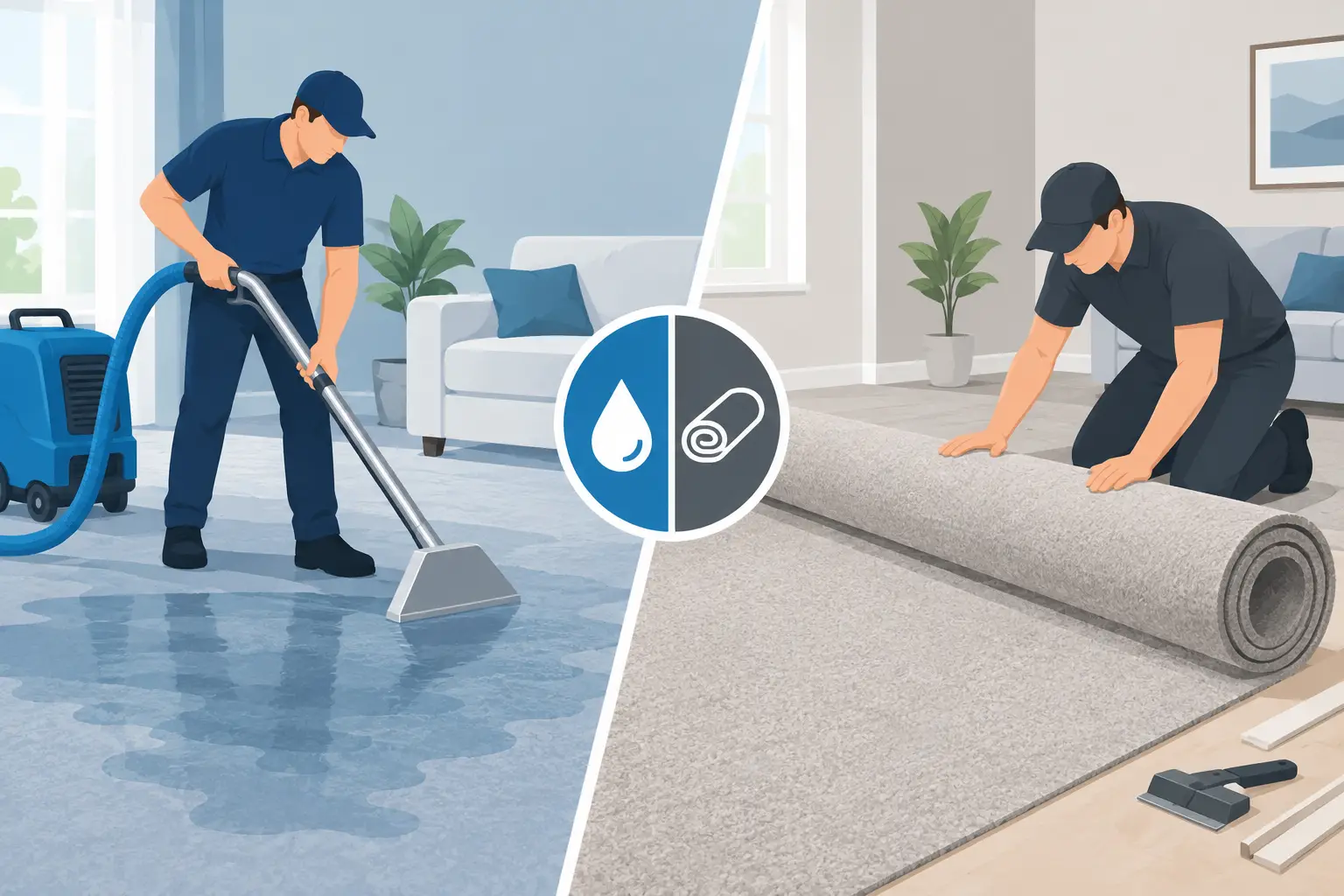
A burst flexi hose, overflowing washing machine or stormwater intrusion can turn a perfectly good carpet into an urgent problem within minutes. With water extraction versus carpet replacement, the right answer depends less on how wet the carpet looks and more on the water source, how long moisture has been present and whether the carpet can be thoroughly dried and sanitised.
For Sydney and Illawarra homes, rentals and businesses, acting quickly can often save carpet, underlay and flooring beneath. Waiting for it to dry naturally, however, can allow moisture to travel into skirting boards, wall cavities and subfloors. Don’t delay and call the professionals when water damage is involved.
Water extraction versus carpet replacement: the real decision
Water extraction is the process of removing standing water and deep moisture from carpet, underlay and affected materials using professional extraction equipment. It is not the same as vacuuming the surface, placing a fan in the room or hiring a small machine. Effective restoration also involves assessing the affected area, lifting carpet where needed, removing or drying underlay, applying suitable antimicrobial treatment and controlling the drying process.
Carpet replacement means removing the damaged carpet and, usually, the underlay beneath it. This may be the safest option where contamination is present, fibres have deteriorated or moisture has remained trapped long enough to create mould and odour issues.
The aim is never to replace carpet that can be restored safely. Equally, it is not worth keeping a carpet that may continue to smell, harbour contamination or cause ongoing moisture damage. A proper onsite assessment provides a clear path forward before hidden damage becomes an expensive repair.
When water extraction can save your carpet
Clean-water incidents are the best candidates for restoration. This includes water from a broken supply pipe, an overflowing bath or basin, a leaking appliance hose, or rainwater that has entered and been dealt with promptly. If the water is clean and extraction starts quickly, many carpets can be saved.
Timing matters. Within the first 24 to 48 hours, technicians have the best chance of extracting moisture before mould growth, dye bleeding, delamination and persistent odours develop. The exact outcome still depends on the carpet construction, amount of water, room ventilation and whether water has reached the underlay or subfloor.
Quality carpet fibres can often recover well after professional water extraction. A trained technician will inspect the pile, backing and seams before determining whether the carpet can be lifted, cleaned, sanitised and dried in place or needs more extensive treatment. Furniture may also need to be moved or raised to prevent timber staining, rust marks and compression damage.
The underlay is often the deciding factor
Underlay behaves like a sponge. Once saturated, it can hold a surprising amount of water against the subfloor and carpet backing. In some clean-water cases, it may be possible to dry the underlay successfully. In others, particularly with bonded foam or heavily soaked material, removing and replacing it is the more reliable option while retaining the carpet itself.
This is one reason a carpet can feel dry on top but remain wet underneath. Surface dryness is not proof that the room is dry. Moisture left below the carpet can create a musty smell days or weeks later, even after the visible floodwater has gone.
Signs restoration remains a sensible option
Water extraction is usually worth considering when the water source is clean, the incident is recent and the carpet has not developed a strong odour or visible mould. It is also more promising when the carpet backing remains intact, colours have not run and moisture has not travelled extensively into walls or timber flooring.
A professional can confirm this with moisture assessment rather than guesswork. Controlled drying equipment and regular checks are designed to remove moisture from the parts of the room that ordinary fans cannot reach effectively.
When carpet replacement is the safer choice
There are situations where extraction alone is not enough. Replacement may be recommended when contaminated water has affected the carpet, when the carpet has been wet for too long, or when the materials cannot be dried to a safe standard.
Sewage backups, toilet overflows containing waste, greywater from appliances, and floodwater that has travelled across outdoor surfaces can contain bacteria, chemicals and other contaminants. These situations require careful handling. Even after water is extracted, carpet and underlay may not be suitable to keep, particularly if contamination has soaked deeply through the backing.
Replacement is also more likely if the carpet has separated from its backing, shrunk significantly, developed mould growth, or retained a strong musty odour after drying. Natural-fibre carpets, such as wool, can be especially sensitive to prolonged moisture. They may shrink, distort or suffer colour changes if not managed promptly and correctly.
Long-term leaks cause hidden damage
A sudden clean-water leak and a slow leak are very different jobs. Water from a pipe leaking behind a wall, under a dishwasher or beneath a bathroom vanity may go unnoticed for days. By the time damp carpet is found, moisture may already have affected timber, plasterboard, skirting boards and the carpet backing.
In these cases, replacing carpet may be part of a larger moisture-damage solution. The priority is identifying and stopping the source, then drying the structure properly. Covering up the issue with a new carpet before the subfloor and surrounding materials are dry can create the same problem all over again.
What a professional water extraction service involves
Fast response is valuable, but good restoration is not just about speed. It is about using the right process for the material and the type of water involved. At Neo Carpet Cleaning, the work begins with an onsite assessment to determine the likely source of water, affected materials and the safest restoration approach.
The initial stage is removing as much water as possible with high-powered extraction equipment. The carpet may then be lifted at the edges so the technician can inspect beneath it and address moisture in the underlay and subfloor. Where appropriate, affected carpet is treated to help manage odours and hygiene concerns before controlled drying begins.
Drying equipment is positioned to circulate air and reduce moisture efficiently. The room may need to remain clear of foot traffic while the carpet dries. Drying times vary, but prompt extraction and proper airflow can significantly reduce the time your carpet stays wet.
If the water damage has created odours or hygiene concerns, sanitisation may be recommended. In suitable circumstances, ULV fogging can assist with deodorising and disinfecting affected spaces. This should be part of a tailored treatment plan, not a substitute for removing water and drying the materials thoroughly.
Cost: saving carpet can be cheaper, but not always
Water extraction is often more affordable than full carpet replacement, particularly when a clean-water incident is caught early. It can also avoid the inconvenience of choosing new carpet, arranging installation and taking rooms out of use for longer than necessary.
However, the cheapest immediate option is not always the least costly outcome. Keeping water-damaged carpet that later develops mould, odour or structural damage can lead to further cleaning, repairs or eventual replacement. For landlords and property managers, that can also create disputes at handover or leave a property unsuitable for new tenants.
Replacement costs vary according to carpet type, underlay, room size and installation requirements. Restoration costs depend on the extent of water, number of affected rooms, furniture moving, contamination level and drying requirements. An assessment allows these options to be compared honestly, based on the condition of the carpet rather than assumptions.
What to do before help arrives
If it is safe to do so, stop the water source first. Turn off the appliance, close the isolation valve or move items away from the affected area. Keep people and pets away from wet carpet near electrical outlets, powerboards or appliances, and do not use household electrical equipment in the wet area.
Remove lightweight items from the floor and place furniture legs on suitable blocks or supports if this can be done safely. Avoid walking water into unaffected rooms. Do not use a normal household vacuum on wet carpet, and do not assume open windows alone will dry a saturated floor.
Take photos for your records, especially if you may need to speak with an insurer, landlord or property manager. Then arrange an urgent assessment. The sooner water is removed, the greater the chance of preventing staining, mould and replacement costs.
A wet carpet does not automatically belong in the rubbish, but it does need a fast, informed decision. If you have water underfoot, a musty smell after a leak or carpet that has been soaked by a flood, arrange professional extraction before the damage has time to settle in.


