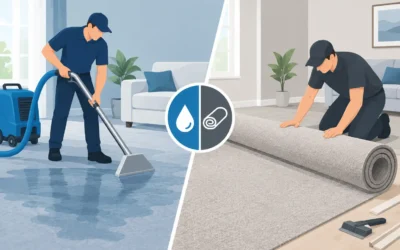

A burst pipe behind a wall, an overflowing washing machine or rainwater tracking under a door can soak a carpet far faster than most people expect. Professional water extraction is the first step in protecting the carpet, underlay, subfloor and indoor air quality after water gets inside. The sooner excess water is removed, the better the chance of avoiding permanent staining, unpleasant odours, mould growth and costly replacement.
For homes, rentals, offices and managed properties across Greater Sydney and Illawarra, the priority is not simply making the surface look dry. Moisture can remain deep in carpet backing, underlay, timber edges and wall cavities long after the top of the carpet feels fine underfoot. Fast, controlled action makes a real difference.
What to do when carpet is wet
Start by stopping the water source where it is safe to do so. Turn off the appliance, isolate the leaking tap or contact your plumber if a pipe has failed. If water is close to power points, electrical equipment or wiring, keep clear of the area and arrange appropriate electrical advice before entering or moving items.
Move lightweight furniture, rugs, boxes and belongings away from the wet area if they can be lifted safely. Do not drag heavy furniture across soaked carpet, as this can damage fibres and spread moisture further. Place foil, plastic blocks or protective pads under furniture legs where possible to reduce staining from timber or metal transfer.
Avoid using a standard household vacuum cleaner to remove water. It is not designed for this job and creates an electrical hazard. Towels and a mop may remove a little surface water, but they cannot reach the moisture held below the carpet pile. Opening windows can help in dry weather, although humid or rainy conditions may make drying slower rather than faster.
Take a few photos for your insurer or property manager before anything is moved. Then arrange an onsite assessment as soon as possible. Don’t delay and hope the carpet will dry by itself. That decision can turn a manageable water incident into a larger restoration job.
Why water extraction needs to happen quickly
Carpet is made from several layers, and each one responds differently when wet. The visible fibres may dry reasonably quickly, while the backing and underlay continue to hold water. Underlay is especially absorbent. Once saturated, it can keep feeding moisture back into the carpet unless it is properly extracted and dried.
The risk depends on the volume of water, how long it has been present, the type of carpet, the material beneath it and the source of contamination. A small clean-water leak caught early may only require extraction and controlled drying. A widespread flood, sewer backup or water that has travelled through contaminated areas requires a more cautious approach, including sanitation and, in some cases, removal of affected materials.
Moisture damage is not always obvious straight away. Within a short period, damp carpet can develop a musty smell. Dyes can bleed, furniture stains can transfer and timber flooring or skirting boards may swell. In warm Sydney weather, mould can become a concern quickly where moisture is trapped and airflow is poor.
Professional water extraction: what happens onsite
A proper restoration visit starts with an assessment, not a one-size-fits-all machine setup. A trained technician checks the affected carpet, its construction, the underlay, nearby walls and the likely water source. This helps determine whether the carpet can be restored safely and what drying plan is needed.
High-powered extraction equipment is then used to remove as much water as possible from the carpet and backing. This is far more effective than surface blotting because the goal is to reduce the moisture load throughout the affected area. In some cases, sections of carpet may need to be carefully lifted so the underlay and subfloor can be inspected and dried.
If the water is clean and the carpet is suitable for restoration, extraction is followed by targeted drying. Air movers promote airflow across damp surfaces, while dehumidification can draw moisture from the air and materials. The exact equipment and drying time depend on conditions. A small isolated wet patch may be resolved relatively quickly, while a larger flood can require ongoing drying and moisture checks.
Sanitisation may be recommended where contamination, odour or hygiene concerns are present. Treatment must suit the affected material. Carpet, upholstery, leather and delicate natural fibres all need different care. Harsh products can create their own damage, particularly on wool carpet or coloured upholstery.
At Neo Carpet Cleaning, water-damage work is approached as restoration rather than ordinary carpet cleaning. The focus is on rapid extraction, material-safe treatment and controlled drying to help prevent long-term moisture problems.
Not all water damage is the same
The source of the water changes the response. Clean water from a fresh supply-line leak is generally lower risk than water from an overflowing drain, toilet, stormwater runoff or sewer. If the water is visibly dirty, has an odour, contains waste, or has entered from outside, avoid handling affected soft furnishings without suitable protection.
Floodwater can carry soil, bacteria and contaminants into carpet fibres and underlay. In these situations, the question is not only whether the carpet can be dried, but whether it can be cleaned and sanitised to an appropriate standard. Sometimes replacement is the safer, more practical option, especially where underlay has been heavily contaminated.
Renters and landlords should also document the incident and notify the relevant property manager promptly. Fast reporting helps clarify responsibility and allows work to be organised before water damage spreads into adjoining rooms or shared building areas.
Can a soaked carpet be saved?
Often, yes – particularly when the water is clean, the affected area is addressed quickly and the carpet has not been wet for long. Synthetic carpets commonly tolerate water extraction well, but every property is different. Wool, older carpets, loose seams, damaged backing and pre-existing stains need extra care.
Underlay is the major variable. If it is only lightly damp, it may be possible to dry it in place depending on the assessment. If it is saturated or contaminated, it may need to be removed and replaced. This can be frustrating, but keeping wet underlay beneath a carpet can trap odour and moisture where it causes ongoing problems.
Furniture, upholstery and leather lounges also need attention after a flood or leak. Water can wick through fabric, padding and timber frames, causing stains, odours and distortion. Leather may stiffen or discolour if it dries too quickly or is treated with unsuitable chemicals. A tailored inspection is the safest way to decide what can be restored.
Signs the area is not dry yet
A carpet can feel dry on top while moisture remains underneath. Watch for a musty smell, cool or damp patches, rippling, darkened edges near walls, swollen skirting boards or recurring condensation. These signs mean the drying process may not be complete.
Do not put rugs, heavy furniture or storage boxes back onto the area until it has been properly assessed as dry. Covering damp carpet reduces airflow and can leave marks or encourage mould. If drying equipment has been installed, keep doors and windows positioned as advised so the setup can work efficiently.
Prevention after the emergency
Once the immediate issue is under control, look for the cause rather than treating the symptom alone. Check appliance hoses, washing machine connections, dishwasher fittings, bathroom seals, roof leaks and drainage around external doors. Replacing a worn hose or repairing a failed seal is far cheaper than another flood restoration callout.
For commercial premises, a simple response plan helps staff act quickly. Know where shut-off valves are located, keep emergency contact details accessible and make sure staff understand that wet carpet should be reported immediately. Property managers can also benefit from regular inspections in vacant properties, especially after heavy rain.
If your carpet, upholstery or flooring has been affected by water, prompt professional help gives you the best chance of a clean, dry and usable space. Acting early protects more than the carpet – it helps protect the comfort, hygiene and value of the property around it.