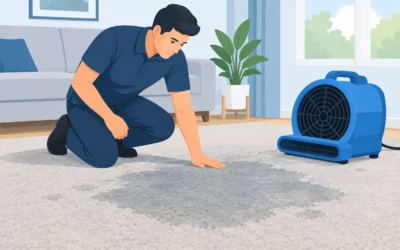

A wet office carpet can hold far more water than it appears to from the doorway. By the time water has spread beneath desks, into partitions or under skirting boards, it may already be affecting flooring, furniture, electrical equipment and indoor air quality. Flooded office recovery is time-sensitive work: the quicker water is removed and the area is dried properly, the better the chance of avoiding long closures, persistent odours and costly replacement.
For businesses across Greater Sydney and the Illawarra, the priority is not simply making the floor look dry. It is finding where moisture has travelled, dealing with the source safely and restoring the workplace to a clean, usable condition.
Make the office safe before moving anything
If water is near power points, extension leads, computers or electrical equipment, keep people away from the affected area and arrange for the power to be isolated where required. Do not walk through standing water if there is any uncertainty about electrical safety. Wet carpet can also become slippery, and saturated ceiling tiles or light fittings need immediate attention.
The type of water matters as much as the amount. Clean water from a burst supply line is different from water that has come through a drain, toilet, stormwater system or external floodwater. Water from these sources can carry contaminants and requires a more cautious approach to cleaning, disposal and sanitisation. Staff should not attempt to clean contaminated water without the right protective equipment and procedures.
Before the clean-up begins, take clear photos of the affected rooms, carpets, furniture and equipment for your insurer, landlord or strata manager. Then remove any dry, portable items from the area if it is safe to do so. Lifting cables, files, stock and furniture off the floor can reduce secondary damage while professional help is on the way.
Flooded office recovery starts with extraction
A mop, wet vacuum or fan may help with a small spill, but they are not a complete answer to a flooded office. Water travels down through carpet pile, underlay and backing, then can migrate into adjacent rooms through gaps at doorways and walls. A carpet can feel dry on top while the underlay underneath remains saturated.
Professional water extraction uses high-powered equipment to remove as much moisture as possible from the carpet and underlay. This is the most valuable early step because every litre extracted reduces the drying load and limits the time moisture sits against building materials.
The technician should inspect the affected area before deciding on the treatment. Carpet construction, the length of time it has been wet, the water category, the condition of the underlay and the type of subfloor all affect the right approach. In some clean-water incidents, a quality commercial carpet can be saved with rapid extraction and controlled drying. In other cases, particularly where contaminated water is involved or moisture has remained for too long, underlay or carpet may need to be removed.
That is not a one-size-fits-all decision. Saving materials is worthwhile where it is safe and practical, but drying contaminated or badly degraded materials can create a bigger hygiene problem later.
Why carpet drying needs more than open windows
Opening windows can be helpful on a dry day, but Sydney and Illawarra humidity can make natural drying slow or unreliable. Fans alone move air, yet they do not remove the moisture from it. If humid air keeps circulating through the room, carpets and building materials can remain damp far longer than expected.
Controlled drying combines air movement with dehumidification and regular moisture checks. The aim is to dry the carpet, underlay and surrounding materials evenly, rather than simply drying the surface. Technicians may need to lift carpet edges, inspect the underlay, position drying equipment strategically and check wall bases, cupboards and adjoining rooms.
This process takes judgement. Overly aggressive drying can affect some materials, while insufficient drying leaves the conditions that encourage mould growth and musty odours. A properly managed dry-down gives the office a better chance of reopening without hidden moisture waiting to cause trouble weeks later.
Protect furniture, documents and office equipment
Office contents often suffer more from delayed action than from the initial leak. Upholstered chairs, fabric partitions and rugs absorb water quickly. Timber furniture can swell or warp, while metal legs and filing cabinets may corrode where moisture is trapped. Move furniture onto blocks or protective tabs where possible so it is not sitting directly on wet carpet.
Paper records, boxed stock and promotional materials should be moved to a dry area promptly. Avoid stacking wet papers tightly together, as this holds moisture and increases damage. Computers, printers and other electronics should be disconnected only when it is safe to do so, then assessed by a qualified technician before they are switched on again.
Do not place wet office furniture in a closed meeting room or storeroom and hope it will dry on its own. This often traps humidity in a small space and turns a manageable water incident into an odour or mould issue. Contents that can be saved need airflow, appropriate cleaning and time to dry properly.
Cleaning and sanitising after a water event
Once extraction is underway, the next question is whether the office needs cleaning, sanitisation or both. With clean water and a fast response, professional carpet cleaning may be part of the restoration process to remove soil brought to the surface and refresh the fibres after drying. Where water is contaminated, sanitisation is more significant and damaged porous materials may not be suitable for retention.
Floodwater can leave behind bacteria, dirt, organic matter and unpleasant odours even after the visible water has gone. A targeted treatment plan may include pre-treatment, deep fibre cleaning, odour treatment and sanitisation of affected carpets, upholstery and touchpoint surfaces. ULV fogging can also be used where appropriate to distribute disinfectant as a fine mist through the treated area.
Fogging is not a substitute for extraction or physical cleaning. If soil, sludge or contamination is still present in carpet fibres or on hard surfaces, it must be dealt with first. The best results come from removing the source of the problem, cleaning the affected materials and then applying the appropriate sanitising treatment.
When can staff return to work?
The answer depends on the extent of the water damage, the source of the water and the office layout. A small clean-water incident dealt with immediately may allow part of the workplace to remain operational while drying equipment runs in a contained area. A larger event involving several rooms, contaminated water or saturated walls may require a longer closure or temporary work arrangements.
Do not judge readiness by appearance alone. Carpets should be dry to an acceptable moisture level, odours should be addressed, and affected surfaces should be cleaned and safe to use. Equipment must also be checked before being returned to service. For businesses that deal with clients, patients, food, children or sensitive records, the standard for reopening should be especially careful.
It is also worth speaking with your landlord, building manager and insurer early. They may have reporting requirements, preferred assessment processes or responsibilities for the building structure. Keeping a record of photos, invoices, affected assets and communications can make the claim process less stressful.
Reducing disruption after the emergency
A flood response is easier when the office has a simple plan. Keep important contacts available, know where the main water shut-off is located and store critical documents and electronics above floor height where practical. If your premises has a history of leaks near windows, bathrooms, kitchens or air-conditioning units, arrange maintenance before the next heavy rain or busy period exposes the issue again.
For urgent water intrusion, Neo Carpet Cleaning provides onsite assessment, rapid water extraction and controlled drying for flooded carpets and upholstery. Fast attendance can make a real difference to what can be restored, especially in commercial spaces where downtime affects staff, customers and daily operations.
A flooded office does not always mean everything must be replaced. But it does mean the first few hours matter. Keep people safe, stop the source where possible, document the damage and get the moisture properly assessed before a damp carpet becomes a longer-term workplace problem.