
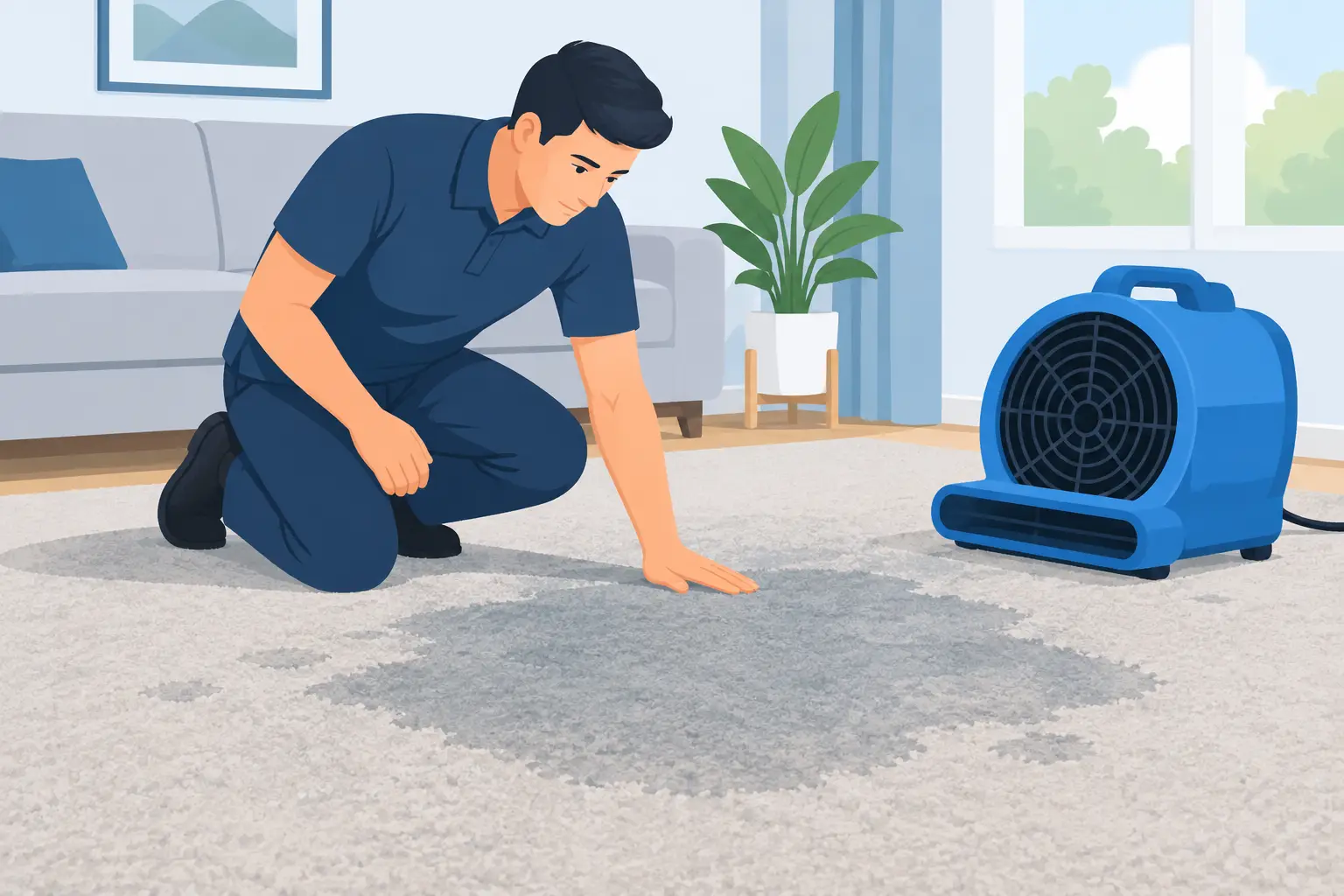
A burst flexi hose, overflowing washing machine or stormwater leak can soak a room before you have time to move the furniture. So, can wet carpet be saved? Often, yes – but the outcome depends on the water source, how long the carpet has been wet, the type of flooring beneath it and how quickly proper extraction and drying begins.
Wet carpet is not automatically ruined. What causes the real damage is moisture left trapped in the pile, backing, underlay and subfloor. That moisture can lead to staining, odours, mould growth, lifted edges, damaged timber and a carpet that never feels properly clean again. Fast action gives you the best chance of saving both the carpet and the room beneath it.
When can wet carpet be saved?
A carpet is usually worth restoring when it has been affected by clean water and the water is removed promptly. Clean water may come from a broken supply pipe, rain entering through a roof leak, or an appliance overflow involving fresh water. Even then, the job is more than putting a fan in the room. The carpet needs enough water extraction to reduce saturation, followed by controlled drying of the carpet, underlay and surrounding materials.
Timing matters. A carpet addressed within the first 24 hours has a far stronger chance of being restored than one left wet for several days. In humid Sydney weather, or in a closed-up unit with little airflow, hidden moisture can remain long after the surface feels dry underfoot.
The type of carpet also affects the result. Synthetic carpets such as polypropylene can tolerate water well, although the backing and underlay may still need attention. Wool carpet needs more careful handling because it can shrink, brown, bleed colour or develop texture changes when over-wet. Expensive rugs, woven carpets and delicate natural fibres should be assessed before aggressive extraction or cleaning begins.
The water source changes everything
Not all water damage should be treated the same way. Restoration technicians generally assess water according to contamination risk, not just how clear it looks.
Clean water can often be extracted and dried safely if the response is quick. Grey water, such as water from a washing machine, dishwasher or shower waste, may contain detergents, soil and microbes. It requires thorough cleaning and sanitisation before the carpet is considered suitable for use again.
Black water is a different situation. This includes sewage, toilet overflows containing waste, floodwater from outside, or water that may carry harmful contaminants. In many cases, porous materials exposed to black water – especially underlay – should be removed and disposed of. Trying to save contaminated underlay simply because it looks dry can leave a serious hygiene and odour problem behind.
If you are unsure where the water came from, treat it cautiously. Keep children and pets away from the affected area, avoid contact with the water, and arrange an onsite assessment.
What to do in the first few hours
Before any cleaning starts, make the area safe. Do not walk through standing water if there are electrical leads, power points or appliances nearby. If it is safe to do so, turn off the water source and move light furniture, loose rugs and valuables out of the wet area.
There are four useful steps you can take while waiting for professional help:
- Blot small wet areas with clean towels, but do not scrub the carpet fibres.
- Lift curtains, remove paper items and take furniture legs off the carpet where possible.
- Open windows only if the outside air is dry and will improve airflow, rather than bringing in more humidity or rain.
- Take photos of the affected room, water source and damaged items for insurance records.
Avoid hiring a small domestic wet vacuum for a heavily flooded room and assuming the job is done. These machines can remove some surface water, but they rarely have the power to extract moisture from deep in the backing and underlay. Also avoid household heaters placed directly on wet carpet. Excessive heat can cause shrinkage, damage fibres and create uneven drying.
Why wet underlay is often the deciding factor
The carpet may look recoverable while the underlay underneath is holding litres of water. Underlay acts like a sponge, particularly foam underlay, and it can keep moisture against the subfloor for days. That is why a carpet can smell musty even after the top surface has dried.
In a clean-water incident caught early, it may be possible to lift sections of carpet, extract water from the underlay and dry the area using air movement and dehumidification. In more severe cases, removing and replacing the underlay is the more reliable option. This can protect the carpet from reabsorbing moisture and allow the subfloor to dry properly.
Timber floors need particular care. Moisture trapped beneath carpet can cause timber boards, particleboard or MDF-based flooring to swell, cup or break down. Concrete slabs can also hold residual moisture, which slows drying and may affect adhesives or floor coverings installed later.
How professional water extraction saves carpets
Professional restoration work starts with an assessment of the source, extent and contamination level of the water. Moisture readings help identify areas that may look dry but still contain water in the backing, underlay, skirting boards or nearby wall linings.
The restoration process may involve high-powered water extraction, controlled lifting of carpet, removal of saturated underlay, targeted cleaning and sanitisation, then the placement of drying equipment. Air movers increase evaporation across the carpet surface while dehumidifiers remove moisture from the air. Used together, they dry materials more effectively than leaving windows open or relying on ceiling fans.
Where appropriate, the carpet can also receive fibre-safe cleaning and stain treatment. This is particularly helpful after dirty water has tracked through the room, or when soil has wicked up from the backing during drying. Odour treatment may be needed if water has sat for too long, especially around pet areas, wardrobes or upholstered furniture.
Neo Carpet Cleaning provides rapid water extraction and flood restoration across Greater Sydney and Illawarra, with tailored treatment for carpet, upholstery and affected materials. The aim is not just to make the carpet look dry on the day. It is to remove moisture, reduce contamination risk and help prevent the costly damage that develops later.
Signs the carpet may not be safe to keep
There are times when replacement is the safer and more cost-effective decision. A carpet exposed to sewage or heavily contaminated floodwater may be unsuitable for restoration, particularly if the contamination has reached the underlay and subfloor. The same applies when mould growth is widespread or when the carpet has remained soaked for an extended period.
Look out for persistent musty smells, visible mould, discolouration that returns after cleaning, rippling that does not settle, or staining at the edges of the room. These signs do not always mean the carpet must go, but they do mean the area needs a proper inspection rather than a quick surface clean.
Rental properties and commercial spaces need extra attention. Landlords and property managers may need clear records of the water event, drying work and any materials removed. For businesses, rapid restoration can also reduce downtime and limit the risk of odours or hygiene complaints affecting staff and customers.
Drying is not finished when the carpet feels dry
A common mistake is to judge recovery by touch alone. Carpet pile can feel dry while the backing, underlay or subfloor remains damp. Controlled drying should continue until moisture readings indicate the affected materials are returning to an acceptable level.
This is also why rushing furniture back into place can cause trouble. A heavy lounge, bed base or filing cabinet can block airflow and trap dampness below. Once the room is dry, furniture can be returned carefully, with protectors under legs if needed to prevent marks or rust transfer.
If you are dealing with a wet carpet, act early, keep the area safe and get the water source identified. A fast, well-managed response can be the difference between a straightforward restoration and replacing carpet, underlay and parts of the floor beneath it.


