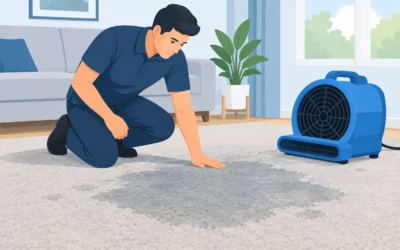

A leaking dishwasher hose can soak a carpet edge overnight. A roof leak can travel down a wall and leave the underlay wet long after the surface feels dry. Knowing how to dry wet carpets after leaks quickly is what separates a manageable clean-up from lingering odours, mould growth and damaged flooring.
The priority is not making the carpet look dry. It is removing moisture from the carpet, underlay and subfloor before it has time to spread or become a hygiene problem. If the leak involves sewage, stormwater, a burst pipe with dirty water or water that has sat for more than a day or two, do not treat it as an ordinary spill. Keep people and pets away and arrange professional water extraction.
Act fast before moisture spreads
Water moves further than most people expect. It can run beneath carpet, soak timber skirting boards, enter nearby rooms and settle in the underlay. By the time a damp patch becomes obvious, the affected area may be much larger.
First, stop the source if it is safe to do so. Turn off the appliance, isolate the water supply, place a container under a minor drip or contact a plumber for a burst pipe. Move furniture, rugs, boxes and other items away from the wet area. Furniture legs can stain wet carpet, while trapped moisture underneath lounges and beds slows drying considerably.
Take a few clear photos before moving items if the damage may be part of an insurance claim. Then begin extraction as soon as possible. The first 24 hours matter most. Fast action helps reduce staining, odours, fibre damage and moisture damage to the subfloor.
Dry wet carpets after leaks: surface drying is not enough
A carpet can feel dry underfoot while the underlay remains saturated. This is especially common with thick pile carpet, wool carpet and rooms where water has seeped underneath from a wall, laundry, bathroom or adjoining unit.
Towels and household wet vacs can remove some water from the surface, but they rarely extract enough moisture from the backing and underlay to prevent problems. A professional water extractor uses powerful suction to pull water from deep within the carpet. Depending on the extent of the leak, technicians may lift part of the carpet, inspect the underlay and assess whether controlled drying can save it.
The right approach depends on the water source and how long it has been there. Clean water from a recently discovered supply line leak may be recoverable with extraction, drying and sanitisation. Grey water from washing machines, dishwashers or overflowing sinks needs more caution because it can contain contaminants. Black water, including sewage and some floodwater, requires specialist restoration work and affected porous materials may need to be removed.
What you can do while waiting for help
If the water is clean and the affected area is small, there are sensible steps you can take while arranging an assessment. Blot or extract water repeatedly rather than rubbing the carpet, which can damage fibres and spread marks. Use a wet/dry vacuum only if it is designed for water collection and you can operate it safely.
Increase airflow by opening windows when weather conditions allow, switching on fans and running air conditioning in dry mode if available. A dehumidifier is useful because it removes moisture from the air instead of simply moving humid air around the room. Keep doors open between dry and wet areas where practical, but do not blow fans directly across contaminated water.
Avoid using a standard household vacuum, heaters placed close to wet carpet, or excessive heat. High heat can shrink some carpets, affect adhesives and create uneven drying. Do not pour carpet shampoo, vinegar, fragrance products or disinfectant directly into a saturated carpet. These products can leave residue, make professional treatment harder and mask an odour without fixing the cause.
If possible, lift lightweight furniture clear of the carpet using foil or plastic protectors under the legs. Do not attempt to lift heavy furniture or pull up carpet if there is a risk of electrical hazards, contaminated water or damage to the carpet installation.
Why underlay and subfloors need inspection
Underlay acts like a sponge. Once saturated, it holds water against the subfloor and can create the ideal conditions for mould growth. In some minor clean-water incidents, underlay can be dried with the correct extraction and air-moving equipment. In other cases, replacement is the safer option.
The subfloor also changes the restoration plan. Concrete can retain moisture for a long time, while timber flooring may swell, cup or deteriorate if water is trapped above it. Moisture meters help identify whether materials are actually drying, rather than relying on touch alone. This is why a proper onsite assessment is valuable after more than a small, recent leak.
Carpet type matters too. Synthetic carpets are often more forgiving after clean water exposure, although their backing, underlay and adhesive can still be affected. Wool and natural-fibre carpets can shrink, brown, bleed colour or develop permanent texture changes if handled incorrectly. Delicate or costly carpet should be assessed before anyone applies heat, chemicals or aggressive extraction.
Watch for these signs after a leak
Even after the visible water has gone, keep checking the room over the following days. A musty smell, cool damp patches, rising humidity, dark marks at carpet edges or skirting boards, and recurring stains can all indicate hidden moisture.
Mould does not always appear immediately. It may grow beneath the carpet or behind skirting boards where it is not visible. If anyone in the property has asthma, allergies or respiratory sensitivities, take persistent dampness seriously. The goal is not just a clean-looking carpet. It is a dry, sanitised and safe indoor area.
For rental properties, landlords and property managers should document the incident, act quickly and keep records of the restoration work. Prompt professional treatment can protect the property and reduce disputes about odours, stains or damage later. For businesses, quick extraction also limits downtime and helps keep workspaces presentable for staff and customers.
When to call a water extraction professional
Call for urgent assistance if water has reached more than a small patch of carpet, travelled under walls or furniture, come from a contaminated source, or has been sitting for several hours. Professional help is also the sensible choice when the carpet smells musty, the underlay feels soaked, the leak has affected multiple rooms or you cannot identify the source of moisture.
A restoration team can assess the water category, extract standing water, inspect carpet and underlay, apply appropriate sanitisation and set up controlled drying equipment. Where hygiene is a concern, ULV fogging may be used as part of a broader sanitisation plan, but it is not a substitute for removing the moisture first.
Neo Carpet Cleaning provides rapid water extraction and flood restoration across Greater Sydney and Illawarra, with treatment tailored to the carpet material, water source and extent of damage. The aim is straightforward: remove water efficiently, reduce odours and contamination risks, and give carpets the best possible chance of recovery.
Do not wait for a wet carpet to become a mould problem. If a leak has reached the carpet or underlay, arrange an assessment early, keep the area ventilated and let controlled extraction and drying do the work properly.