
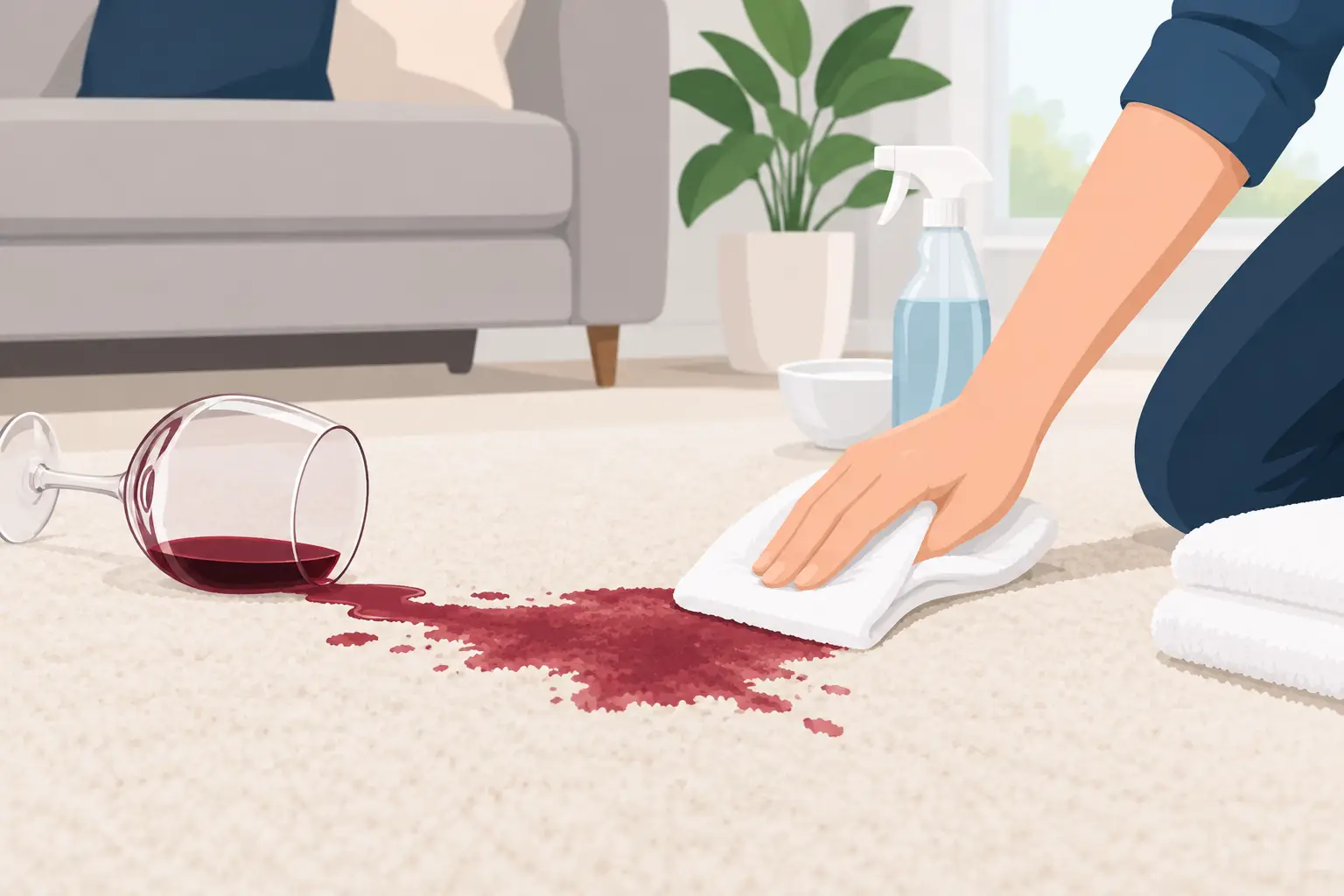
A dropped glass of shiraz can turn a relaxed dinner into a carpet emergency in seconds. The good news is that you can often remove red wine carpet stains successfully when you act promptly, use the right method and avoid rubbing the colour deeper into the pile. The wrong response, however, can spread the stain, weaken delicate fibres or leave a sticky residue that attracts dirt later.
Red wine contains strong pigments called tannins. Once they dry, those pigments bond more firmly with carpet fibres, particularly in light-coloured carpet, wool and natural fibre blends. Fast action matters, but so does a careful approach.
What to do the moment red wine hits the carpet
Start by removing as much liquid as possible before reaching for any cleaning product. Place a clean white absorbent cloth or plain paper towel over the spill and press down firmly. Keep replacing it with a dry section of cloth until it stops picking up wine.
Do not scrub. Scrubbing roughens the carpet pile, pushes the wine into the backing and can make the stained area look fuzzy even after the colour is gone. Work from the outside of the spill towards the centre so the stain does not spread across the room.
If there are solids from food, broken glass or other debris in the area, carefully remove them first. Never use a coloured towel, printed serviette or dark cloth, as dye can transfer onto damp carpet and create a second problem.
How to remove red wine carpet stains at home
Once you have blotted away the excess wine, use a mild solution rather than a harsh chemical attack. Mix a small amount of clear, fragrance-free dishwashing liquid with cold water – around a quarter teaspoon in one cup of water is enough. Avoid hot water, which may help set the stain into some carpet types.
Before treating the main spill, test the solution on an inconspicuous section of carpet, such as inside a wardrobe or behind furniture. This is especially important with wool, silk, viscose, handmade rugs and carpets with rich or dark dyes.
Apply the solution to a clean white cloth, not directly to the carpet. Dab the stained area gently, working from the edge inward. Follow with another clean cloth lightly dampened with cold water to lift away detergent residue, then blot dry with a towel.
Repeat the process only while you can see colour transferring onto the cloth. If the cloth remains clean but the stain is still visible, do not keep soaking the area. Too much moisture can reach the carpet backing and underlay, creating drying issues, odours or water marks.
Use plain water carefully
Cold water can help dilute a fresh spill, but flooding the carpet is not the answer. A small amount of water applied by cloth is safer than pouring water directly from a glass or jug. Pouring can drive wine through the carpet into the underlay, where it may cause lingering odour and reappear as the carpet dries.
After treatment, place a dry white towel over the area and weigh it down lightly for 15 to 30 minutes. This helps draw remaining moisture upwards. Remove the towel afterwards and allow the carpet to dry with good airflow. Open windows where practical, or use a fan pointed across the room rather than directly into the wet pile.
Common red wine stain mistakes to avoid
A few popular home remedies can make a red wine stain harder to treat professionally. Salt is often thrown over wine spills, but it does not remove the tannins from carpet. It can leave gritty residue in the pile and may cause you to delay proper cleaning.
Baking soda can absorb moisture, but a thick paste is difficult to remove fully and can leave a pale, crusty patch. Similarly, shaving cream, laundry powder and dishwasher tablets are not designed for carpet fibres. Their perfumes, brighteners and alkaline ingredients may leave residue or affect the carpet’s colour.
Avoid bleach at all costs. Even diluted bleach can permanently remove colour from carpet and damage wool fibres. Strong supermarket stain removers can also be risky if they are not matched to the fibre type. A product that works on synthetic carpet may cause colour loss, browning or texture changes on wool or delicate rugs.
Steam is another issue. Professional steam cleaning uses controlled temperature, extraction and fibre-safe chemistry. Holding a household steam cleaner over a red wine spill can force pigment further into the pile or set the stain before it has been properly treated.
Wool, natural fibres and expensive carpets need extra care
Not all carpet responds the same way. Many Sydney homes have wool carpet, wool blends or quality rugs that need a gentler approach than polyester or nylon. Wool is naturally absorbent and reacts poorly to high-alkaline cleaners, bleach and excessive rubbing.
Viscose, jute, sisal and some handwoven rugs are even more sensitive. Water alone can create browning, shrinkage or texture distortion in these materials. If wine has spilled on a valuable rug, an antique piece, a pale wool carpet or carpet with a known stain-resistant treatment, blot it immediately and arrange professional assessment rather than experimenting with multiple products.
The same applies when the wine has reached carpet edges, stairs, joins or the area near skirting boards. These spots can hold moisture out of sight, and drying them properly may require professional extraction equipment.
When a red wine stain needs professional treatment
Call a carpet cleaning professional if the spill has dried, covers a large area, has been treated unsuccessfully before or has left a pink, purple, brown or shadow-like mark. Dried wine often needs targeted pre-treatment before deep fibre cleaning and controlled extraction can remove the remaining pigment.
Professional treatment is also the sensible option for end-of-lease carpets, rental properties and commercial spaces. Property managers and landlords usually look beyond the surface colour. A damp patch, detergent residue or lingering wine odour can still affect the presentation of the carpet at handover.
An experienced technician can inspect the fibre, identify previous cleaning residues and choose a treatment suited to the carpet. The process may involve stain pre-treatment, hot water extraction with controlled moisture, rinsing and drying measures. Results depend on the carpet material, the age of the stain and what has already been applied, but early professional attention gives the best chance of full removal.
Neo Carpet Cleaning provides tailored stain treatment and deep steam cleaning for homes, rentals and businesses across Greater Sydney and Illawarra. For stubborn wine spills, the aim is not simply to make the spot look better. It is to remove as much staining matter and residue as possible while protecting the fibres and helping the carpet dry properly.
Prevent the stain from coming back
A red wine stain can appear to disappear when wet, then return as the carpet dries. This is often caused by wicking, where remaining wine or moisture in the backing travels back up through the pile. It can also happen when a cleaning product has been left behind and attracts soil.
If the mark returns, avoid reapplying several different chemicals. Blot the area with a clean damp cloth, dry it thoroughly and arrange an inspection if the colour remains. A technician may need to flush and extract the affected section rather than treat only the visible carpet surface.
Once the carpet is clean, consider a protectant application where suitable. Protectant does not make carpet stain-proof, but it can give you more time to blot spills before they penetrate the fibre. It is particularly useful in dining areas, lounges, rental properties and busy offices.
The best move after a red wine spill is simple: blot quickly, keep the treatment gentle and do not over-wet the carpet. If the colour is not lifting, or the carpet is valuable or delicate, don’t delay and call the professionals before a small spill becomes a permanent reminder of dinner.