
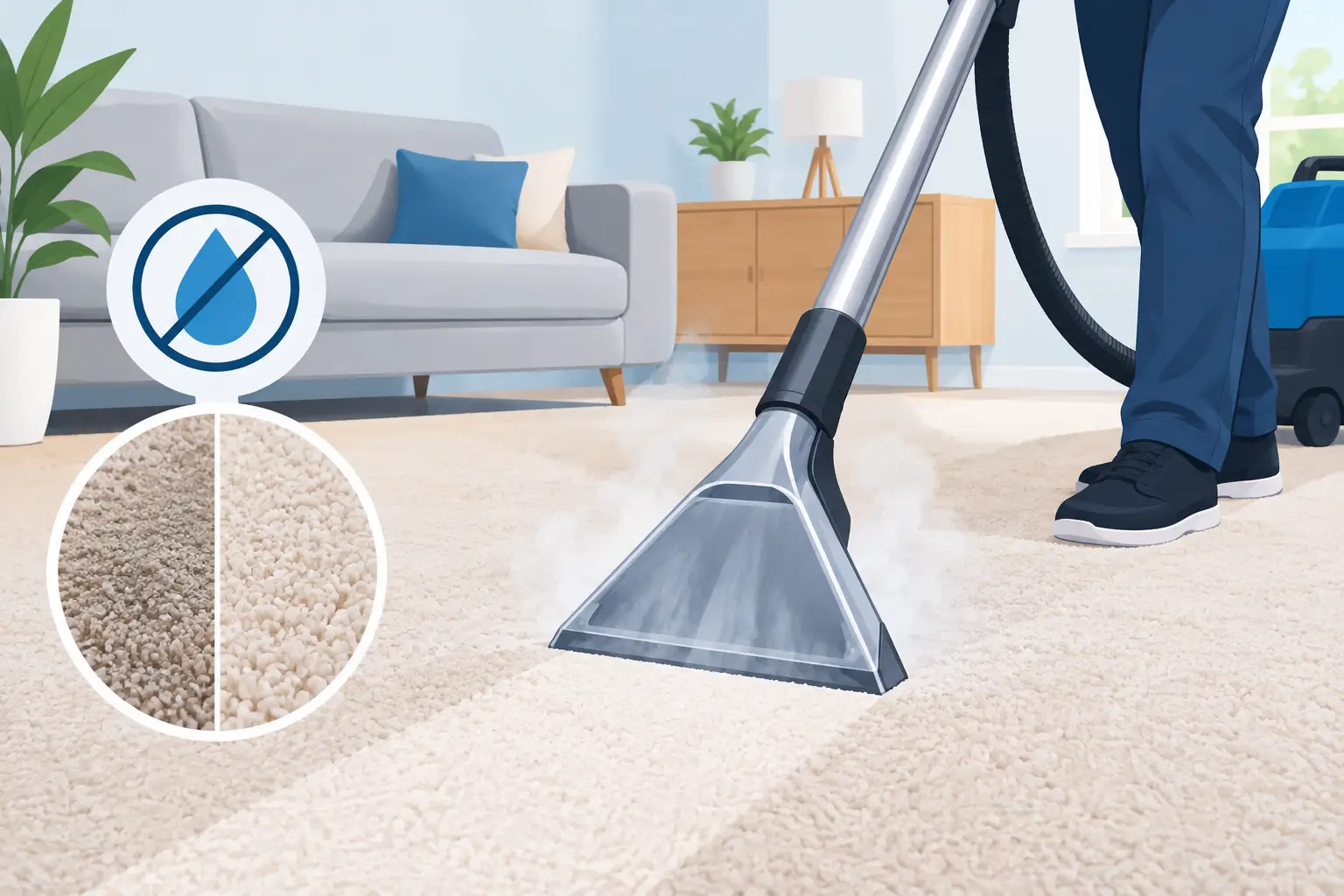
A carpet can look clean on the surface while holding tracked-in soil, pet dander, food residue and odours deep around the fibres. Knowing how to steam clean carpet properly makes the difference between a fresher, healthier result and a carpet left too wet, streaky or damaged. The aim is not to soak the carpet. It is to loosen embedded grime with heated cleaning solution, extract it thoroughly and dry the area under control.
For most homes, rentals and workplaces, the method commonly called steam cleaning is actually hot water extraction. Professional equipment sprays heated water and a suitable cleaning solution into the pile, then immediately vacuums the moisture and soil back out. True dry steam has a place in some cleaning jobs, but it is generally not the right method for cleaning a full carpet.
Check the Carpet Before You Start
Carpets are not all made the same. Synthetic nylon and polypropylene carpets are generally durable and respond well to hot water extraction. Wool, wool blends, jute-backed carpet, silk and some natural-fibre rugs need a more cautious approach. Too much heat, moisture or alkaline chemical can cause shrinkage, browning, colour loss or damage to the backing.
Start by checking the manufacturer’s care label if one is available. If you are renting, take clear photos of existing stains and worn areas before cleaning. This gives you a record of the carpet’s condition for an end-of-lease clean.
Test any cleaning product in a hidden section, such as inside a wardrobe or behind a lounge. Apply a small amount, blot it with a white cloth and check for colour transfer. If colour comes away or the fibres change texture, stop and seek professional advice.
Do not steam clean a carpet where the backing has begun to separate, where there is mould, or where water has entered from a flood or leaking pipe. Those situations call for fast water extraction and moisture assessment, not a standard clean. Delays can allow contamination, staining and long-term moisture damage to spread below the carpet.
Prepare the Room for a Better Clean
Good preparation improves extraction and prevents the machine from spreading loose soil into the fibres. Move lightweight furniture out of the room where practical, and protect heavier furniture legs with tabs or foil after cleaning. Vacuum slowly and thoroughly before bringing out the steam cleaner. This is not a step to rush – dry vacuuming removes hair, grit and surface dust that a wet cleaner is not designed to collect efficiently.
Before cleaning, deal with stains individually. Blot fresh spills from the outside edge towards the centre with a clean white towel. Avoid scrubbing, which can push the stain deeper and roughen the pile. Use a stain treatment that suits the type of mark, whether it is coffee, food, pet urine, ink or oily residue, and give it the recommended dwell time.
For a practical setup, make sure you have:
- a carpet hot water extraction machine in good working order
- a fibre-safe carpet cleaning solution and a stain pre-treatment product
- clean white towels for blotting and checking soil removal
- fans, open windows or air conditioning ready to support drying
Keep children and pets out of the room until the carpet is dry. Heated equipment, hoses and damp carpet can all create avoidable hazards.
How to Steam Clean Carpet Step by Step
Fill the machine’s clean-water tank according to its instructions. Use hot tap water only if the manufacturer permits it, and do not exceed the recommended temperature. More heat is not automatically better, particularly on wool or delicate carpet. Add cleaning solution sparingly and measure it accurately. Too much detergent leaves residue behind, which can make carpet feel stiff and attract new soil faster.
Start at the point furthest from the doorway so you can work your way out without walking over freshly cleaned carpet. Work in straight, overlapping passes. On each forward pass, spray the cleaning solution as directed by the machine. On the return pass, extract slowly and steadily.
The extraction passes matter most. Make one or two dry passes with no spray after each wet pass to recover as much moisture as possible. If the machine’s recovery tank water is very dark, empty it and continue with fresh water rather than allowing dirty water to reduce cleaning performance.
Avoid repeated wet passes over the same spot. A stubborn stain may need targeted treatment and a little patience, not more water. Over-wetting can soak the backing and underlay, causing musty odours, slow drying, rippling or browning marks as moisture carries soil to the surface.
For high-traffic lanes, such as hallways, entry areas and the route from the kitchen, clean in a crosshatch pattern only if the carpet can tolerate it and the first pass has been extracted well. This can improve soil removal, but it also increases moisture. In a humid Sydney summer or a closed-up unit, controlled cleaning and drying are more valuable than chasing one extra pass.
Rinse and Extract Until the Carpet Feels Fresh
One common DIY mistake is leaving cleaning product in the carpet. Detergent residue can feel slightly crunchy underfoot, dull the appearance of the pile and cause rapid resoiling. If your machine allows it, complete a final rinse with clean water only, followed by several slow extraction passes.
Do not judge the job only by the colour of the recovery water. Check the carpet as you go. It should look evenly cleaned, feel damp rather than saturated, and have no obvious chemical smell. A white towel pressed firmly into the carpet should not become heavily wet. If it does, keep extracting before moving on.
Some marks will lighten but not disappear completely. Old red wine, permanent dye, bleach spots, rust, paint, pet staining and stains that have penetrated into the underlay often need specialist treatment. Bleach damage, in particular, is a colour-loss issue rather than a removable stain. It may require carpet dyeing or repair rather than more cleaning.
Dry the Carpet Quickly and Safely
A properly extracted carpet will usually dry within two to six hours, though weather, ventilation, carpet thickness and humidity all affect the result. Thick pile, shaded rooms and wet weather can extend drying time. If the carpet is still noticeably damp after a full day, improve airflow immediately and investigate whether it was over-wet.
Open windows where weather permits, run ceiling fans or portable fans, and use air conditioning or a dehumidifier if available. Keep internal doors open to promote airflow. Avoid placing furniture back until the carpet is fully dry, especially timber or metal furniture that can stain or rust onto damp fibres.
Walk on the carpet only when necessary during drying. Clean socks are better than bare feet or shoes. Once dry, vacuum again to lift the pile and remove any dry residue left near the surface.
When a Professional Carpet Clean Is the Better Option
A hire machine can be useful for routine maintenance in a small, lightly soiled room. It is less suitable when you are dealing with expensive wool carpet, heavy pet odours, recurring stains, large commercial areas or an end-of-lease inspection where presentation matters. The machine may not have the heat, suction or fibre-specific treatment options needed for a deeper result.
Professional carpet cleaning also gives you a clearer plan for difficult problems. A trained technician can inspect the fibre, identify the likely stain type, apply the correct pre-treatment, control water use and carry out high-powered extraction. Where hygiene is a concern, sanitisation treatments can be added without treating every carpet or stain exactly the same way.
If a carpet has been affected by flooding, sewage, a burst hose or significant water ingress, do not treat it as a normal steam-cleaning job. Fast extraction, moisture monitoring and contamination assessment are needed to help prevent mould and permanent damage. Don’t delay and call the professionals.
For Greater Sydney and Illawarra homes, rentals and workplaces, Neo Carpet Cleaning can assess the material, treat stains carefully and carry out deep extraction with controlled drying. A clean carpet should feel fresh, look even and dry properly – not leave you wondering what is happening underneath.


